Planetherapy

In the Press03.11.2025

Ynet Article: Planetherapy’s First Delegation of Volunteer professionals Lands in Israel – Free Emotional Support from Around the World!

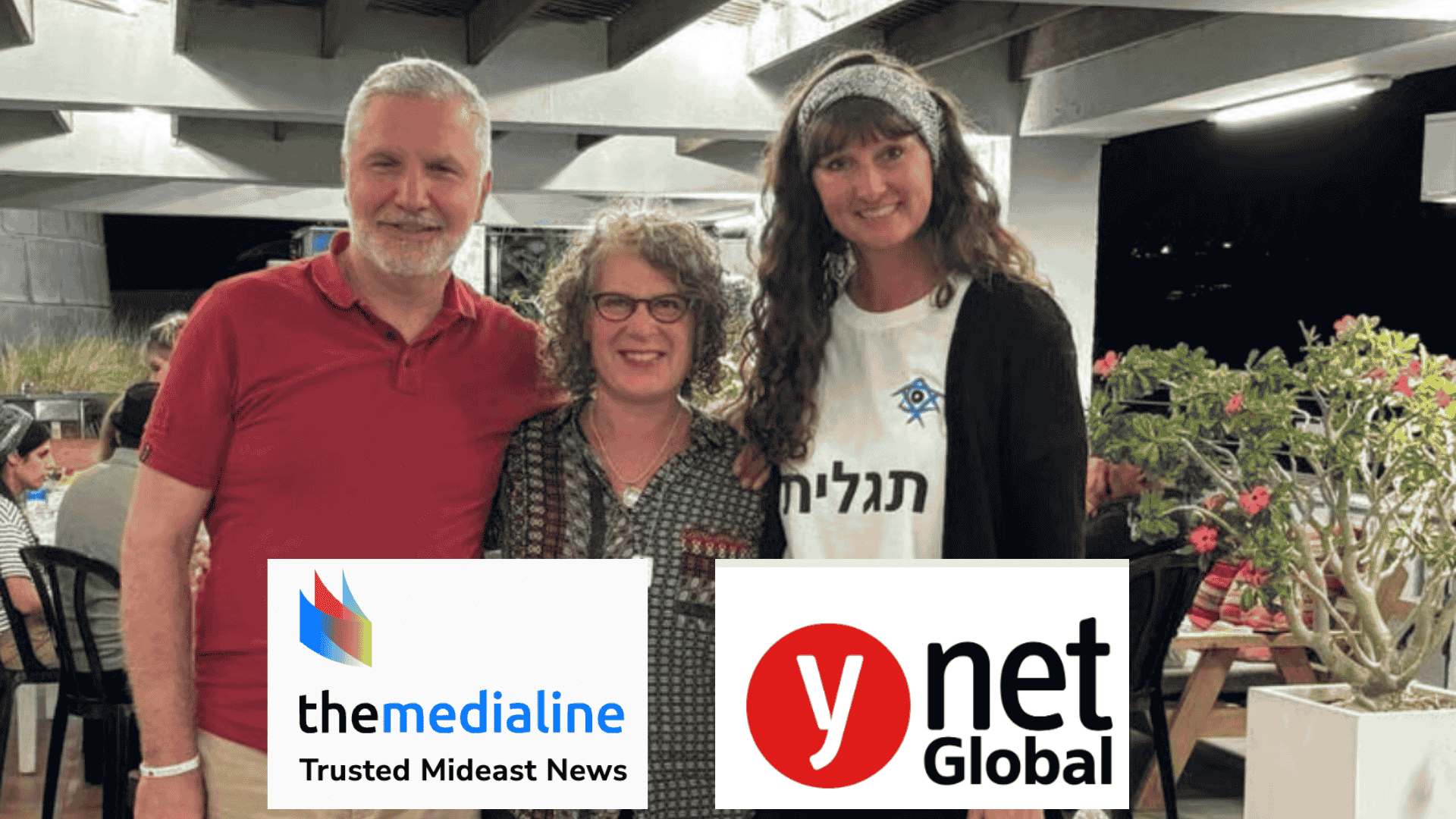
Sharon Kidon interviews Dr. Bat Chen Shachar and Dr. Carol Lieberman, representatives of Planetherapy’s first international delegation, on Ynet TV — an inspiring initiative founded by Ilana O’Malley that, for the first time, enables volunteer professionals from around the world to come to Israel and provide free emotional support to those affected by the war. The volunteer professionals share powerful experiences from the field, the deep connections formed with soldiers and civilians, and emphasize the importance of continuing support now — as calm returns but emotional wounds begin to surface. Planetherapy proves that borders do not stop compassion. Through hundreds of volunteer professionals from 35 countries, an inspiring channel of healing, connection, and humanity has opened — straight to the heart of Israel.

In the Press03.11.2025

‘When things start to come up’: International volunteers provide free support sessions to Israelis as war winds down

Planetherapy, founded by Ilana O’Malley, is a global network of over 300 volunteer professionals from 35 countries, offering emotional support in 22 languages. Since the war began, they’ve provided over 4,000 free sessions to Israelis and Jews worldwide. As the fighting quiets, Planetherapy highlights the emotional “second wave” — the hidden trauma that surfaces after the crisis. To meet this need, they brought an international delegation to Israel, offering powerful in-person support to first responders and affected communities — including clinical psychologist Igor Teplitchi (France), Dr. Shari Geller (Canada), and volunteer professional Jill Dykstra (USA).

In the Press06.05.2025

Member of Knesset Dabi Biton recommends and refers to the Planetherapy organization

Member of Knesset Dabi Biton courageously shares the emotional difficulty she has experienced since the events of October 7th, and recommends Planetherapy as an essential resource for emotional support. In her words, she emphasizes the importance of seeking help and the significant contribution of the organization for the mental well-being of citizens during this complex period. View more>>

Mental Health Resources11.05.2026

The Power Of Listening To Ourselves

In a world filled with constant noise, expectations, and distractions, we slowly lose touch with our own inner voice. We become used to listening to what others expect from us, what society defines as success, or what keeps everyone around us comfortable. Yet learning to truly listen to ourselves is one of the most important foundations for emotional balance, healthy relationships, mental well-being, and inner alignment.

Mental Health Resources03.05.2026

Unlimited Emotional Support: Speaking with Someone From Anywhere in the World

Sometimes, to find the right person to talk to, you need to look beyond the horizon. At Plantherapy, we have created a global support network that brings together hundreds of volunteer professionals and professionals from all over the world, all dedicated to one goal: supporting those who need it. That is why we operate online – so that no geographical distance will prevent you from receiving the most accurate support, in your own language, and at a time that suits you. Quality emotional support is no longer limited to those who are “close to home”; it is available to you anywhere in the world.

Mental Health Resources08.07.2025

When the Body Speaks: Listening to the Unhealed Wounds of Trauma

As we all know it is important to understand the silent signals after such an ongoing trauma as October 7 and the rise in national and global fear. With the intensifying waves of hatred, violence, and uncertainty in Israel and around the world against Jews, many people have found themselves caught between two conflicting realities: one part of them continues to function, while another feels numb, panicked, shut down, or disconnected. If you’ve experienced this, you’re not alone. And you’re not broken. In the aftermath of a traumatic event, many of us try to “get back to normal.” We return to work, take care of others, stay busy, or even manage to smile again. From the outside, it may seem as though we’ve made it through. But our bodies often tell a different story. Trauma doesn’t disappear just because time passes. As Dutch psychiatrist Bessel van der Kolk wrote in The Body Keeps the Score, trauma is not just something we remember — it’s something we carry. It lodges itself deep in the body, beyond words, beyond conscious awareness. It distorts how we breathe, sleep, relate, and even how we feel our own skin. When a traumatic experience is too overwhelming to process — especially when it involves violence, loss, terror; or the collapse of our family, personal and intimate structures of everything we believed in (our safety and confidence)— the psyche does what it must: it fragments. We may go numb. We may dissociate. We may become highly reactive, hypervigilant, or emotionally frozen. All of these are survival strategies. They are not signs of weakness. They are signs of how hard the body is working to protect us from something it cannot yet understand and incorporate. Eventually, the body starts to signal that the trauma remains unresolved anf ofthe speaks when the soul can ́t. Even when we think we’re coping well, unresolved trauma often shows up in physical and emotional symptoms that don’t seem to “make sense”: ● Trouble sleeping, or waking up with dread or panic ● Chronic fatigue or body tension that no amount of rest relieves ● A constant sense of threat, even in safe environments ● Difficulty concentrating, or feeling like your mind “goes blank” ● Emotional numbness, or unexpected outbursts of anger or grief ● Digestive issues, chest tightness, or breath that feels stuck ● Feeling disconnected from your own body or surroundings ● Sometimes, people report that they “don’t feel real” or that life feels like a fog. Others describe feeling emotionally flat, unable to cry or connect, even though they know something is wrong. These are not psychological flaws. They are the body’s language. They are its way of asking for help — not to be rushed back to “normal,” but to be held, listened to, and slowly re-integrated. Why talk-based support isn’t always enough


Latest Updates07.05.2026

Expanding Emotional Support for the Israeli Community Abroad: In-Person Support Circles

Planetherapy has long operated as a global network, making emotional support accessible to Israelis and Jews in Israel and around the world. Based on a network of hundreds of multilingual volunteer professionals across numerous countries, we are now launching a significant new branch of activity: In-Person Emotional Support and Resilience Circles. This new project is designed to address the emotional complexities faced by Israelis living abroad, rooted in the professional knowledge we have gathered and the unique methodology we have developed.

Latest Updates14.04.2026

Elevating Our Clinical Standard: Prof. Abraham Peled Joins Our Advisory Team

We are deeply honored to announce a significant milestone in our mission to provide world-class emotional support: Prof. Abraham Peled, a renowned leader in psychiatry, is officially joining our advisory team to provide a professional clinical envelope for our volunteer professionals and volunteers. In the world of emotional support and trauma relief, complexity is our daily reality. To ensure our team has the most robust tools and expert backing, we are committed to partnering with the brightest minds in the field. The addition of Prof. Peled to our ranks represents a major leap forward in the quality of care and supervision we provide.

Latest Updates23.03.2026

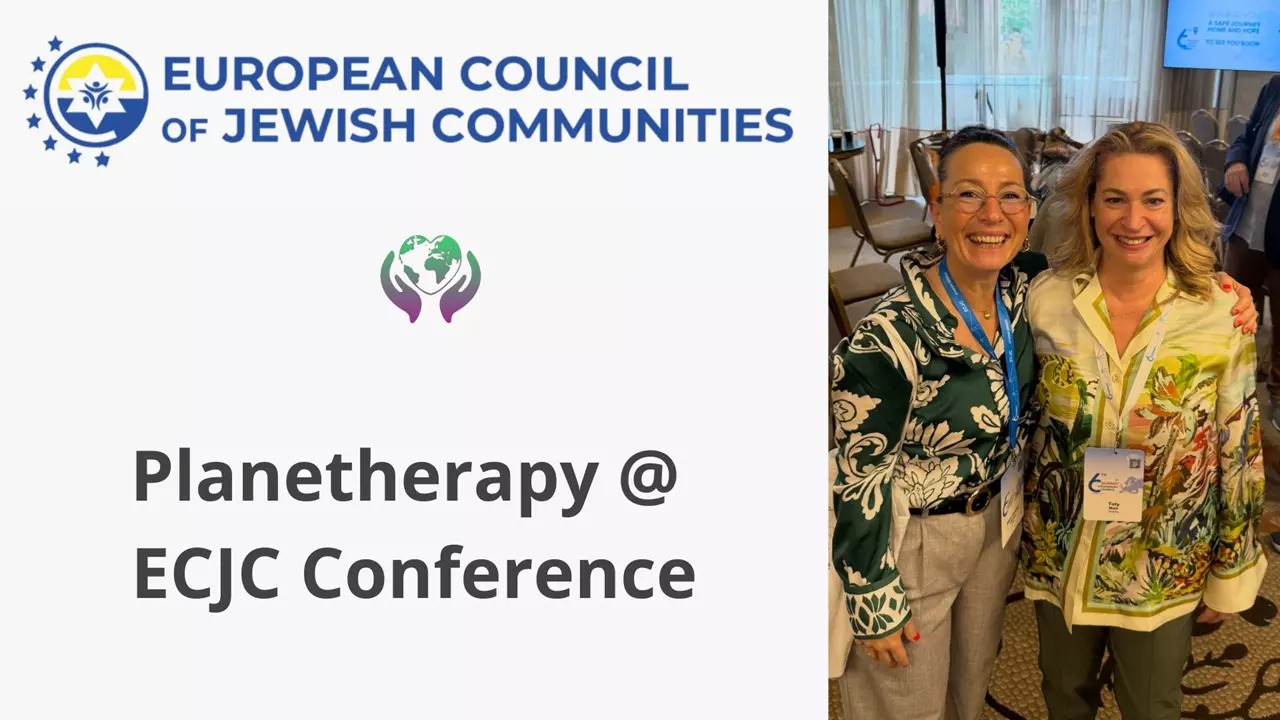
Building Resilience Across Borders: Planetherapy’s Founder at the ECJC Conference

Last week, our Founder, Ilana, represented Planetherapy at the annual conference of the ECJC (European Council of Jewish Communities). This significant gathering brought together top community leaders and leading social welfare and resilience professionals from across the continent. For us at Planetherapy, attending the conference was a critical opportunity to listen closely to the voices from the field. At a time when European Jewish communities and Israeli expats are facing complex emotional challenges, Ilana met with community and organizational leaders to gain a deeper understanding of the unique complexities within each region.